
You have a headache. Your knee hurts after a run. Or maybe you are sneezing uncontrollably because of pollen. You reach for the shelf in your bathroom cabinet or grab something from the pharmacy counter. These over-the-counter (OTC) medications feel harmless because you do not need a prescription to buy them. But that accessibility comes with a hidden danger. Many people treat these drugs like candy, popping pills without reading labels or understanding how they work in their bodies.
The reality is stark. In the United States, acetaminophen overdose is responsible for 56,000 emergency department visits annually. That is more than any other single drug. Meanwhile, regular use of NSAIDs can increase your risk of gastrointestinal bleeding by 2.5 times. And taking the wrong type of allergy medicine can make you drowsy enough to cause a car accident or fall at home. Understanding the difference between these three major categories-NSAIDs, acetaminophen, and antihistamines-is not just about feeling better; it is about staying safe.
Understanding NSAIDs: Power and Risk
When you have swelling, inflammation, or pain from an injury, Nonsteroidal Anti-Inflammatory Drugs, or NSAIDs, are usually the go-to choice. Common brands include Advil and Motrin (ibuprofen), Aleve (naproxen sodium), and Bayer (aspirin). These drugs work by blocking enzymes called cyclooxygenase (COX) in your body. By stopping these enzymes, NSAIDs reduce the production of prostaglandins, which are chemicals that cause pain, fever, and inflammation.
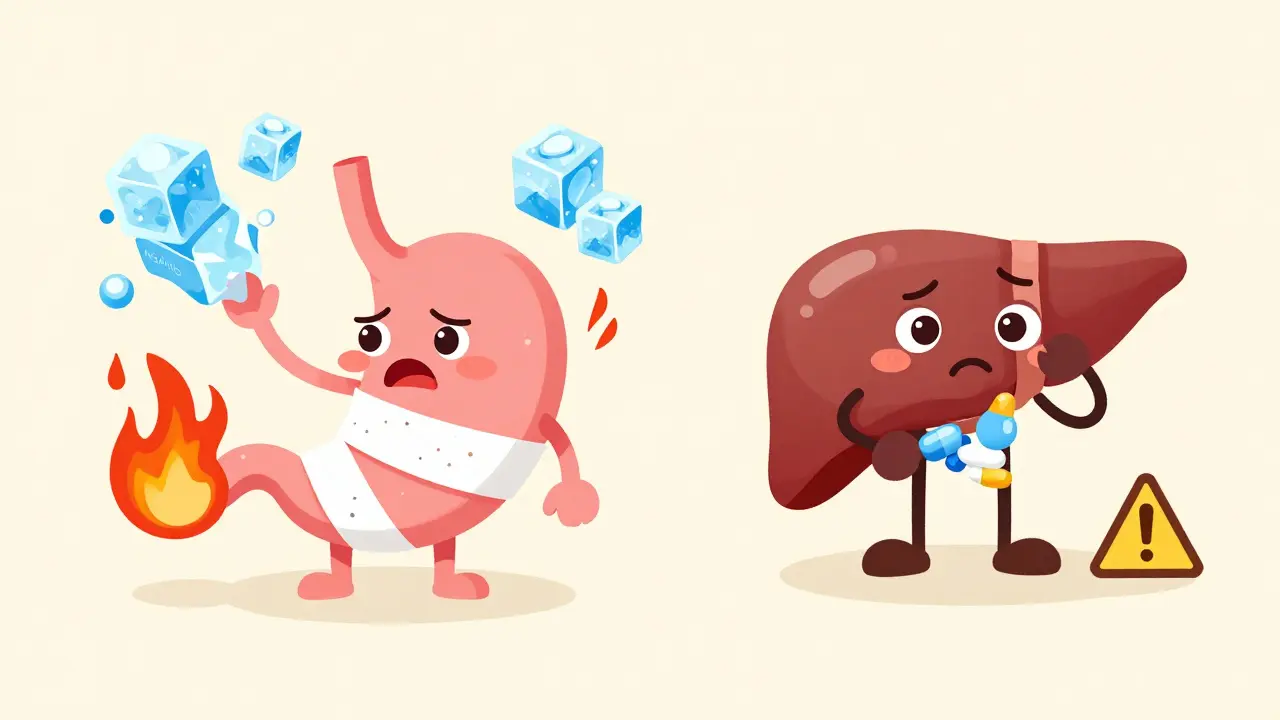
This mechanism makes them highly effective for specific conditions. If you sprained your ankle or have arthritis flare-ups, ibuprofen is often superior to other options. A 2021 meta-analysis in the Journal of Pain Research found that ibuprofen showed 50% greater efficacy than acetaminophen for inflammatory pain. However, this power comes with significant side effects. Because COX enzymes also protect the lining of your stomach, blocking them can lead to stomach irritation, ulcers, and bleeding. The risk increases significantly if you take more than 1,200mg of ibuprofen daily for extended periods.
| Drug Name | Brand Examples | Dosage Frequency | Max Daily Dose (OTC) | Key Risk |
|---|---|---|---|---|
| Ibuprofen | Advil, Motrin IB | Every 4-6 hours | 1,200 mg | Stomach bleeding, kidney strain |
| Naproxen Sodium | Aleve | Every 8-12 hours | 660 mg (first day), then 440 mg | Cardiovascular risks, stomach issues |
| Aspirin | Bayer, Ecotrin | Every 4 hours | 4,000 mg (varies by use) | Bleeding risk, Reye's syndrome in kids |
You should avoid NSAIDs if you have a history of stomach ulcers, kidney disease, or certain heart conditions. Also, be cautious if you have asthma, as 10-20% of asthmatics experience worsened symptoms, known as aspirin-exacerbated respiratory disease. For many adults, topical NSAIDs like Voltaren Arthritis Pain gel offer a safer alternative for joint pain, as they deliver medication directly to the site with minimal absorption into the bloodstream.
Acetaminophen: The Silent Threat
If NSAIDs are the heavy lifters, Acetaminophen is the quiet worker. Sold under brands like Tylenol, it does not reduce inflammation. Instead, it works primarily in the central nervous system to block pain signals and reduce fever. This makes it an excellent choice for headaches, toothaches, and fevers where swelling is not the main issue. It is also generally safer for your stomach than NSAIDs, making it the preferred option for people with gastric sensitivities or those on blood thinners.
However, acetaminophen has a dark side: liver toxicity. Unlike NSAIDs, which hurt your stomach, acetaminophen damages your liver if you take too much. The therapeutic index-the gap between a helpful dose and a harmful one-is narrow. While the FDA allows up to 4,000mg per day for healthy adults, many manufacturers now recommend capping intake at 3,000mg to provide a safety buffer. The real danger lies in "hidden" acetaminophen. It is an ingredient in hundreds of combination cold, flu, and sleep aids. It is easy to pop two Tylenol pills for a headache and then take a nighttime cold syrup, unknowingly doubling your dose and risking severe liver damage.
To stay safe, always check the "Active Ingredients" label on every medication you take. If you drink alcohol regularly, you must lower your acetaminophen limit further, as alcohol also stresses the liver. For children, precision is critical. The FDA has standardized liquid acetaminophen to 160mg per 5mL to prevent dosing errors, but parents still confuse tablespoons (TBSP) and teaspoons (TSP). Always use the measuring device provided with the medicine, not a kitchen spoon.
Antihistamines: First vs. Second Generation
Allergies are miserable, but the cure can sometimes feel worse than the disease. Antihistamines block histamine, the chemical your body releases during an allergic reaction. They fall into two distinct generations, and choosing the right one depends on your lifestyle and needs.
First-generation antihistamines, such as diphenhydramine (Benadryl) and chlorpheniramine, have been around since the 1940s. They work quickly, often within 15-30 minutes, but they cross the blood-brain barrier easily. This causes significant sedation. A 2022 Consumer Reports survey found that 50% of users experienced noticeable drowsiness. For elderly patients, this is dangerous. A 2021 study in JAMA Internal Medicine linked first-generation antihistamines to a 50% increased risk of falls due to cognitive impairment and balance issues. Use these only when you need immediate relief and can afford to sleep or stay still.
Second-generation antihistamines, including loratadine (Claritin), cetirizine (Zyrtec), and fexofenadine (Allegra), were developed to minimize brain penetration. They provide 24-hour symptom control with minimal sedation. Only about 8% of users report feeling sleepy on loratadine. However, they take longer to kick in, usually 1-3 hours. If you know you will be exposed to allergens, take these before heading outside. Note that individual responses vary; genetic differences in histamine receptors mean one person might thrive on Zyrtec while another gets no relief. It may take some trial and error to find your match.

Critical Safety Practices and Common Errors
Even with knowledge, mistakes happen. The average person takes 2-3 illness episodes to learn proper OTC usage, according to a University of Arizona study. Here are the most common pitfalls and how to avoid them:
- Combining Products Unknowingly: As mentioned, acetaminophen hides in many products. Before taking a new med, list all active ingredients of what you have already taken today. Do not exceed 3,000mg of acetaminophen in 24 hours unless directed by a doctor.
- Ignoring Drug Interactions: NSAIDs can interact with blood pressure medications, reducing their effectiveness. Anticoagulants like warfarin react dangerously with aspirin and high-dose ibuprofen. Always ask your pharmacist if your current prescriptions conflict with OTC choices.
- Misusing Measuring Tools: Liquid medications require precise dosing. Never guess. Use the oral syringe or dosing cup included with the product. Kitchen spoons vary wildly in size and lead to overdosing, especially in children.
- Long-Term Use Without Supervision: OTC does not mean risk-free. Using NSAIDs for pain more than 10 days a month requires medical supervision to monitor kidney function and stomach health. Chronic pain needs a diagnosis, not just masking.
Pharmacists are your best resource. Dr. Adam Singh, a retail pharmacy manager, notes that pharmacists can help navigate confusing packaging and identify safer alternatives for patients with multiple health conditions. Do not hesitate to ask them questions. They understand the balance of safety and effectiveness better than any internet search.
Future Trends and Regulatory Changes
The landscape of OTC medications is shifting. The FDA is constantly reviewing safety data. In 2023, there were proposals to lower the maximum daily acetaminophen dose from 4,000mg to 3,250mg to further protect against liver failure. We are also seeing the rise of "behind-the-counter" medications. Pseudoephedrine, a decongestant, is restricted due to its use in manufacturing methamphetamine. You now need ID and face a purchase limit of 3.6g daily and 9g monthly under federal law.
Looking ahead, more prescription drugs may transition to OTC status. Low-dose atorvastatin for cholesterol is a candidate, following the success of omeprazole (Prilosec), which captured 70% of the heartburn market after going OTC. This democratizes access but places more responsibility on consumers to self-manage correctly. Digital tools are also emerging; apps like Walgreens' "Find Care" offer personalized recommendations based on symptoms, helping users choose the right product safely.
Ultimately, treating yourself is a privilege that requires respect for these powerful chemicals. Read the label. Know your limits. When in doubt, talk to a professional. Your health is worth the extra minute of caution.
Can I take NSAIDs and acetaminophen together?
Yes, you can often alternate or combine NSAIDs (like ibuprofen) and acetaminophen for better pain relief, as they work through different mechanisms. However, you must track the total dosage of each separately to avoid exceeding their respective daily limits. Consult a healthcare provider if you have underlying health conditions.
Why is acetaminophen bad for the liver?
Acetaminophen is metabolized by the liver. At normal doses, it breaks down safely. However, in high doses, it produces a toxic byproduct called NAPQI. The liver uses glutathione to neutralize this toxin. If you take too much acetaminophen, your glutathione stores deplete, allowing NAPQI to build up and cause severe liver cell death.
Which antihistamine is best for allergies without drowsiness?
Second-generation antihistamines like loratadine (Claritin), fexofenadine (Allegra), and cetirizine (Zyrtec) are designed to minimize drowsiness. Fexofenadine is generally considered the least sedating. However, individual responses vary, so you may need to try a few to see which works best for your body.
Are generic store-brand OTC meds as good as name brands?
Yes. Generic OTC medications must contain the same active ingredients, in the same strength and dosage form, as the name-brand equivalent. They are regulated by the FDA to ensure bioequivalence. The main differences are usually in inactive ingredients (like fillers or flavors) and price, with generics being significantly cheaper.
How long should I take OTC pain relievers before seeing a doctor?
You should not use OTC pain relievers for more than 10 days for pain or 3 days for fever without consulting a doctor. Persistent pain indicates an underlying condition that needs diagnosis rather than just symptom management. Long-term NSAID use also requires monitoring for kidney and stomach health.